
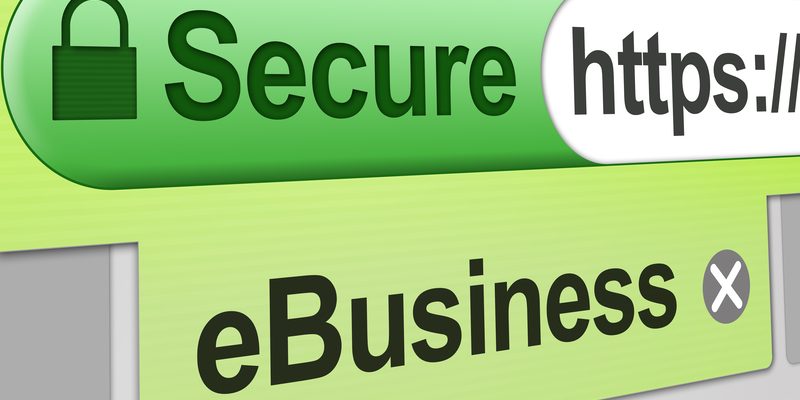
If you’ve ever noticed the padlock icon in your browser’s address bar or seen a website starting with https:// instead of http://, you’ve encountered an SSL certificate. But what exactly does that mean — and does your business website really need one?
In 2026, the answer is simple: Yes. An SSL certificate is no longer optional. It is a foundational requirement for website security, search engine visibility, and customer trust.
What Is an SSL Certificate?
An SSL (Secure Sockets Layer) certificate encrypts the data transmitted between a visitor’s browser and your website’s server. Today the technology is technically called TLS (Transport Layer Security), but SSL remains the commonly used term.
Encryption protects sensitive information such as contact form submissions, login credentials, and payment details from being intercepted by hackers.
When SSL is installed, your website switches from HTTP to HTTPS. The “S” stands for secure.
Google officially confirmed that HTTPS is a ranking signal in search results, which you can read about directly from
Google’s Search Central documentation.
Why SSL Certificates Are Critical for Modern Websites
1. Protects User Data
Without encryption, data submitted through your website can be intercepted. Even simple contact forms transmit personal information that should always be secured.
2. Improves SEO Performance
SSL directly supports search engine optimization (SEO). Secure websites are favored over non-secure sites, and browsers actively warn users away from unsecured pages.
3. Prevents “Not Secure” Browser Warnings
Modern browsers like Chrome and Firefox clearly label non-HTTPS sites as “Not Secure.” That warning alone can reduce conversions and damage credibility.
4. Builds Trust and Professionalism
The padlock icon signals legitimacy. Visitors are far more likely to submit forms, request quotes, or complete purchases on secure websites — especially when paired with professional website design.
Types of SSL Certificates
- Domain Validation (DV) – Basic encryption verification. Ideal for blogs and informational sites.
- Organization Validation (OV) – Confirms business legitimacy.
- Extended Validation (EV) – Highest level of validation, often used for eCommerce and enterprise brands.
For most small and mid-sized businesses, a properly configured DV or OV certificate is more than sufficient.
Are SSL Certificates Free?
Yes — many hosting providers offer free SSL certificates through services like
Let’s Encrypt . These certificates provide strong encryption and are perfectly suitable for most business websites.
Paid SSL certificates are typically used when advanced validation or warranty coverage is required.
The most important factor isn’t cost — it’s proper configuration and ongoing maintenance.
Do You Really Need an SSL Certificate?
If your website:
- Collects contact form submissions
- Processes payments
- Uses login portals
- Wants to rank well on Google
- Wants to appear credible and professional
Then yes — you absolutely need SSL.
Even informational websites without transactions should use HTTPS. Running a non-secure site in 2026 signals outdated technology and lowers trust.
How SSL Supports SEO & AI Visibility (AIO)
Search engines and AI systems prioritize secure, trustworthy sources. HTTPS is now considered a baseline trust signal.
Without SSL, your website may:
- Rank lower in search results
- Be flagged as unsafe by browsers
- Be deprioritized in AI-generated answers
Security is no longer just an IT concern — it’s a marketing and visibility strategy.
Common SSL Misconceptions
“My website doesn’t sell anything.”
Even basic contact forms collect personal information. That data should always be encrypted.
“SSL slows down websites.”
Modern HTTPS protocols are optimized for performance. In many cases, secure websites actually load faster.
“It’s too technical to manage.”
Most hosting providers offer one-click SSL activation. If you’re unsure whether your SSL is properly configured, working with a professional web team can ensure everything is secure and optimized.
Final Thoughts: SSL Is No Longer Optional
An SSL certificate protects your users, strengthens your SEO performance, builds trust, and supports long-term online visibility.
If you’re unsure whether your website’s SSL certificate is installed correctly — or if your site is still running on HTTP — it’s time to address it.
At Strait Web Solutions, we build secure, SEO-optimized websites designed for performance and long-term growth.
Explore our web services or contact us today to ensure your website is secure and positioned for success.
Frequently Asked Questions
Is SSL required for SEO?
Yes. Google uses HTTPS as a ranking signal, and non-secure websites may perform worse in search results.
Can I install SSL myself?
Many hosting providers allow simple SSL activation. However, configuration errors can cause mixed content issues, so professional setup is often recommended.
Does SSL protect my entire website?
SSL encrypts data in transit between users and your server. It does not replace malware protection, firewalls, or secure hosting.
How can I check if my website has SSL?
Your website URL should begin with https:// and display a padlock icon in the browser address bar.